
If you’ve ever wanted to see your website through your user’s eyes, eye tracking is one of the most powerful tools available. It shows you exactly what grabs attention, what gets ignored, and how users visually interact with your content.
But now, there’s a new player in the game: predictive eye tracking.
While traditional (regular) eye tracking relies on real human subjects and specialised hardware, predictive eye tracking uses AI-powered models to simulate and forecast where attention is likely to go.
So how do these two methods compare? Which one should you use? Let’s break it down.
🧠 What Is Regular Eye Tracking?
Regular eye tracking (also called classic or hardware-based eye tracking) involves using cameras and sensors to track actual eye movements as people look at screens, products, or environments. It’s the gold standard for studying visual attention.
🔍 How It Works:
- Participants are fitted with eye-tracking glasses or sit in front of a monitor with built-in sensors.
- Their eye movements—fixations, saccades, and blinks—are recorded in real time.
- This data is turned into heat-maps, gaze plots, and attention flow paths.
✅ Pros:
- Highly accurate: Tracks real human behaviour with millisecond precision.
- Rich data: Includes gaze patterns, dwell time, blink rate, etc.
- Real-world context: Can be used in physical environments or on-screen.
❌ Cons:
Small sample size: Typically limited to a few dozen participants due to cost.
Expensive: Requires specialised hardware and participant testing.
Time-consuming: Setup, testing, and analysis can take weeks.
🤖 What Is Predictive Eye Tracking?
Predictive eye tracking uses artificial intelligence and machine learning to simulate how people are likely to view content—without needing real users. It analyses your design or web page and predicts visual attention within seconds.
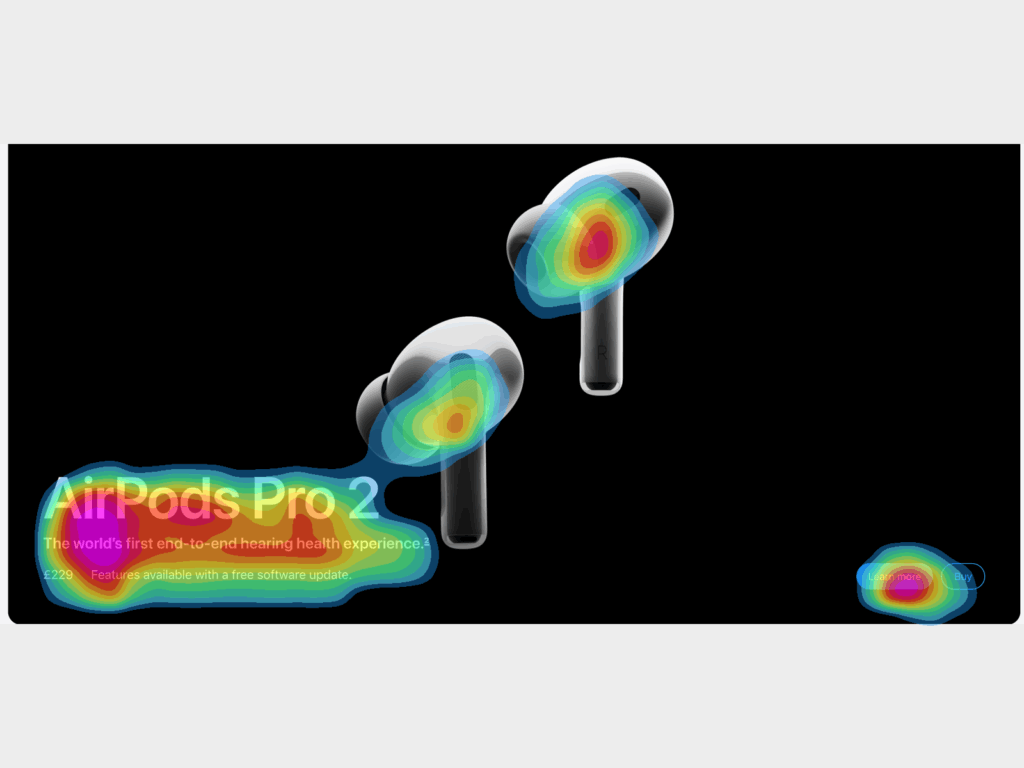
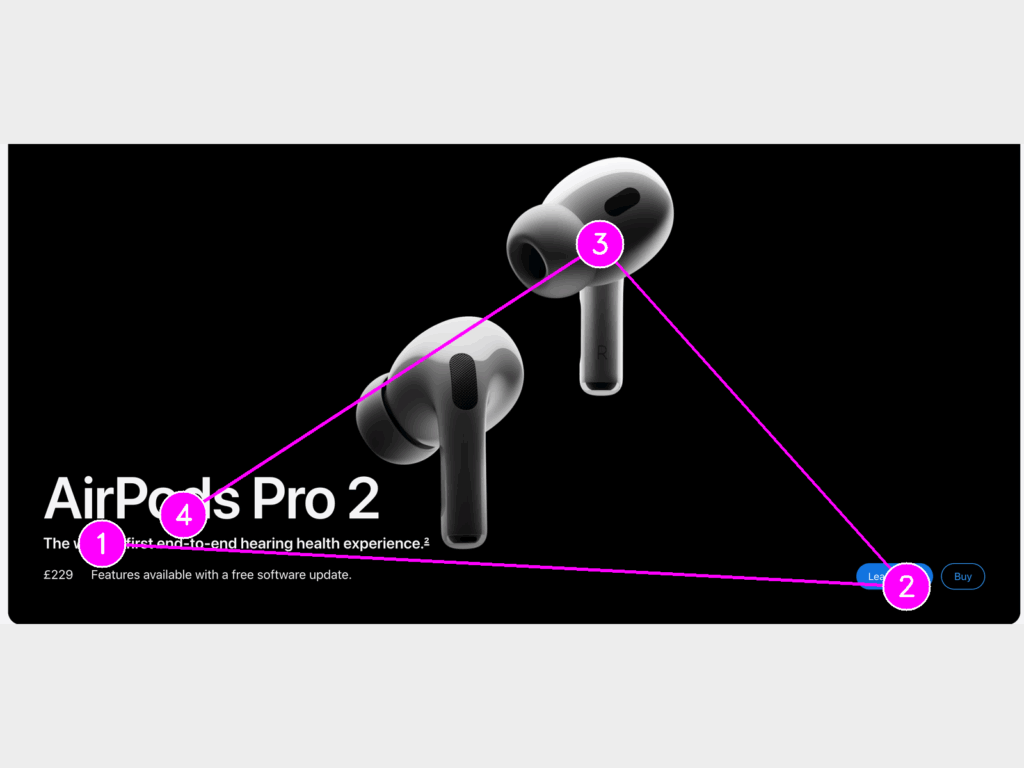
🔍 How It Works:
You upload an image, webpage, or video.
The AI analyses visual features like colour, contrast, hierarchy, and layout.
It predicts where users are most likely to look, producing an attention heatmap.
✅ Pros:
Fast and scalable: Get insights in seconds, no testing required.
Cost-effective: No need for labs or live participants.
Great for early design stages: Test mockups, wireframes, and creative concepts.
- A conversion
- A potential lead or sale
- The ROI on your traffic spend
- The credibility of your offer
❌ Cons:
Less granular: Simulates average behaviour—not exact real-world reactions.
Lacks emotion/intent data: Can’t measure facial expressions or motivation.
Best used for visual hierarchy, not deeper behavioural insights.
🆚 Predictive vs Regular Eye Tracking: Side-by-Side
| Feature | Regular Eye Tracking | Predictive Eye Tracking |
|---|---|---|
| Data Source | Real human participants | AI simulation |
| Accuracy | Very high (real data) | High for general attention patterns |
| Speed | Slow (testing required) | Instant |
| Cost | Expensive | Affordable |
| Scalability | Low (manual testing) | High (test unlimited visuals) |
| Best For | UX studies, physical environments, real behaviour | Early-stage design, marketing creatives, quick testing |
| Emotion Analysis | Yes (with facial tracking) | No |
🛠 When to Use Which?
Use Regular Eye Tracking when:
You need high-stakes insights (e.g., medical devices, automotive UX)
You’re studying live human interaction
Budget and time allow for deeper research
Use Predictive Eye Tracking when:
You’re in early design or wireframe stages
You want to test dozens of variations quickly
You need quick feedback on ad creatives, banners, or landing pages
You’re optimising visual hierarchy or CTA placement
🚀 Tools to Try
Regular Eye Tracking Tools:
- Tobii Pro
- iMotions
- EyeLink
- Pupil Labs
Predictive Eye Tracking Tools:
- Re4m.io
- EyeQuant
- 3M VAS (Visual Attention Software)
- Neurons Predict
💡 Final Thoughts
Both regular and predictive eye tracking have their place in modern UX and marketing. Think of predictive eye tracking as the fast, scalable cousin of traditional eye tracking—perfect for making informed design decisions early and often. For deep behavioural insight and real-world testing, traditional methods still reign supreme.
👉 Pro tip: Use both in tandem. Start with predictive to narrow your focus, then validate with traditional eye tracking when it really counts.
Want to know where your users are looking—without a lab full of hardware?
Predictive eye tracking is your secret weapon.
📩 Reach out to our team to start testing your designs today—before your audience scrolls past. Or visit www.re4m.io to get started now!